
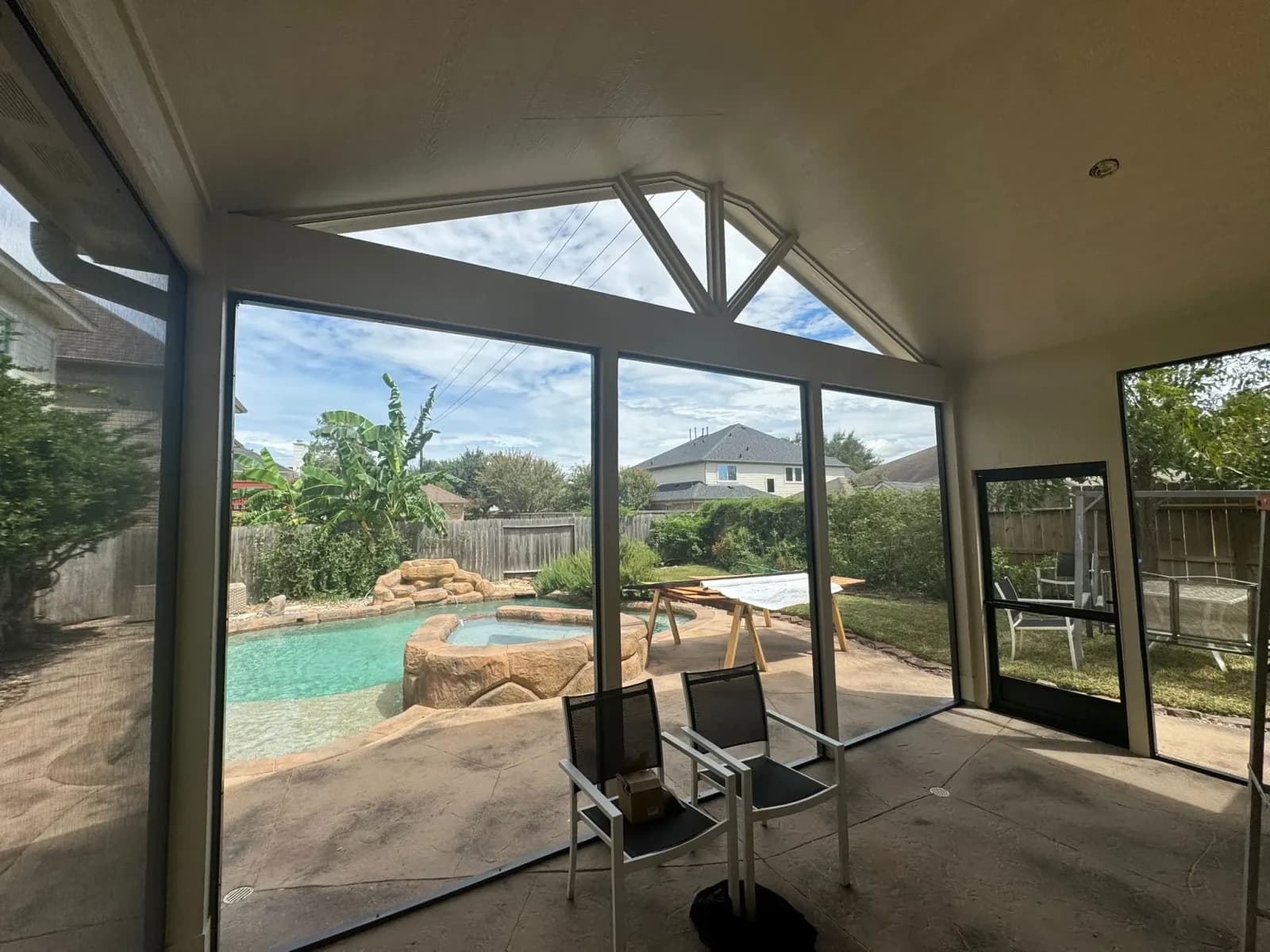
Pull up to almost any Sugar Land subdivision built in the early 2000s right now — mid-June, heat index pushing 108 — and you'll see the same story written in concrete: spalling at the expansion joints, surface cracks running diagonal from the corner of the garage slab, and a pool deck so bleached and pitted it looks like it belongs in a parking garage. The concrete didn't fail because concrete is bad. It failed because whoever poured it didn't account for where it was going.
Houston is not Phoenix. It's not Atlanta, either. It sits in a subtropical zone where summer air temperatures routinely hit 97°F while the surface temperature of an exposed concrete slab can reach 155°F or higher. Then it rains four inches in two hours, cools everything down fast, and the slab contracts. That thermal cycling, layered on top of our expansive black clay soils, is what actually destroys Houston concrete over time. Material choices and installation details that work fine in Denver or Charlotte will get you a cracked driveway in seven years here.
What Houston's Clay Soils Actually Do to a Concrete Slab
Most homeowners hear "expansive soil" and think it just means the foundation moves. That's true, but the same mechanism is happening under your driveway and pool deck constantly, and it's more violent than people realize. Houston's Beaumont clay — which underlies most of Katy, Pearland, and the southwest suburbs — shrinks significantly during drought and swells when saturated. The differential movement can be 3–4 inches across a 20-foot driveway span in a dry summer followed by a wet fall.
A standard 4-inch residential driveway slab has no business sitting on that soil without a proper base. We put down a minimum of 4 inches of compacted crushed limestone base — often 6 inches in areas with known soil issues — before a single truck shows up. Skipping the base or going thin on it is the single most common mistake I see when we're called in to replace a driveway that's only eight years old. The concrete itself is fine. It's floating on nothing.
Reinforcement matters here more than in most cities, too. Fiber-reinforced concrete — where polypropylene or steel microfibers are blended into the mix — handles the micro-cracking that comes from thermal stress and soil movement better than plain concrete. For driveways, we spec a minimum 4,000 PSI mix with fiber reinforcement. For pool decks, we'll go to 4,500 PSI. The upcharge over standard mix is modest, usually $300–$600 on a typical project. Not doing it costs you a full replacement later.
Summer Curing Is Where Projects Go Wrong Fast
Concrete curing in Houston summer is a legitimately different operation than curing in October. When ambient temperatures exceed 90°F and you're working in direct sun, the surface of a freshly poured slab can lose moisture faster than the hydration reaction can complete. What you get is a slab that looks fine on day three and starts showing surface crazing and delamination by year two.
Here's what proper hot-weather curing looks like on a real job:
- Pour early in the morning, ideally before 9 a.m., to avoid peak surface temperatures during the finishing window
- Use a set-retarding admixture in the mix to slow hydration and buy working time without adding water
- Apply a curing compound or wet-cure with burlap and plastic immediately after finishing — not hours later
- Keep the slab shaded or covered for a minimum of 7 days; 10 days is better in June and July
- Avoid pouring on days where the forecast calls for rain within 4 hours of the pour, which is genuinely hard to time in Houston's summer storm season
That last point matters more than people think. A rainstorm hitting fresh concrete can wash out the surface paste and leave a rough, weakened layer that seals underneath the cure. We've seen that happen on pools decks after a fast-moving cell came through the Heights in July 2023 — a pour that was two hours old got hammered. The deck had to be resurfaced before it was ever used.
Finish Options: What Actually Works Around a Houston Pool
This is where the trade-off is worth being honest about. Stamped concrete looks excellent on day one. The texture, the color, the way it mimics stone or pavers — it photographs well and it sells the backyard. But around a pool in Houston, a heavily stamped and sealed surface has real durability issues. The topical sealers that give stamped concrete its color saturation need to be reapplied every 2–3 years, and Houston's UV intensity degrades them faster than in most markets. Skip a recoat cycle and you get a faded, peeling surface that's harder to restore than to replace.
For pool decks specifically, a broom-finished or exposed-aggregate surface holds up better long-term and stays cooler underfoot — a meaningful factor when the concrete surface temperature in direct sun can blister bare feet. Exposed aggregate, where the top paste layer is washed back to reveal the stone beneath, gives you traction, thermal performance, and zero sealer maintenance for the first 5–7 years. It costs roughly $8–$14 per square foot installed, compared to $12–$20 for stamped. The downside: it doesn't have the visual drama of stamped. If aesthetics are the priority and you're committed to the maintenance schedule, stamped can work — just go in with eyes open about the upkeep.
For driveways, a simple broom finish with properly placed control joints every 8–10 feet is still the most durable option in this climate. Decorative concrete on a driveway is a personal choice, but in Houston's heat-freeze cycles (yes, we get occasional freezes — February 2021 made that clear), the expansion and contraction at texture seams is a stress riser. Keep it simple, keep it thick, and keep the joints where they belong.
If you're thinking through a driveway replacement or a pool deck overhaul and want a realistic read on what your site actually needs, our concrete and masonry services page covers what we handle across the Houston area. And if you've already got a project in mind, we offer free consultations — request one here and we'll come take a look before you've committed to anything.
The heat isn't going anywhere. Neither is the clay. But concrete built right for this specific place will outlast the house around it.