
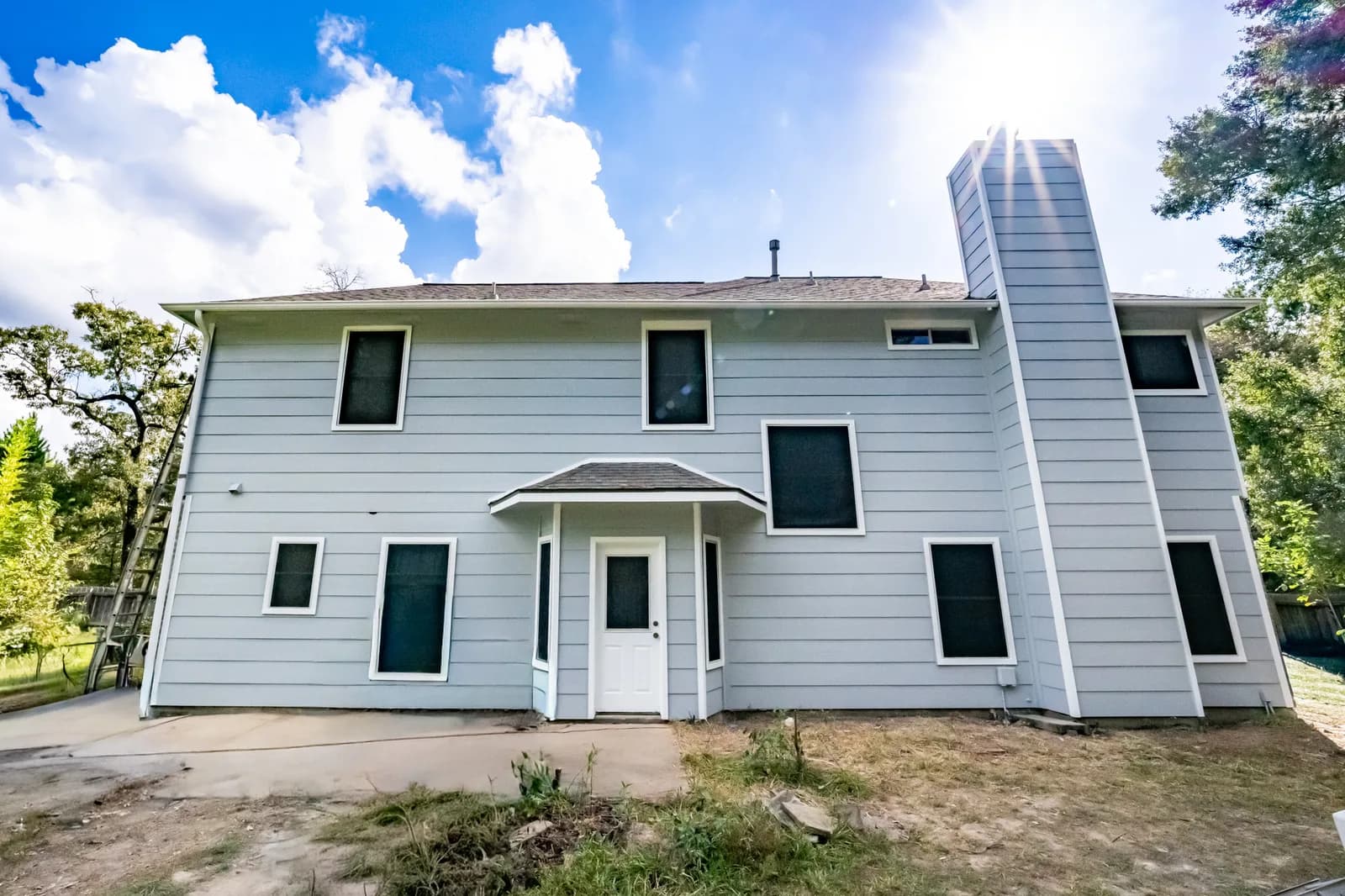
Most Houston homeowners made their peace with hurricane prep back in June, checked a box somewhere, and moved on. Now it's mid-July, the Atlantic is warming up, and the real season — August through October — is still ahead. That gap between "I meant to handle that" and an actual named storm making landfall is exactly the window you're in right now.
We've been doing exterior work on Houston homes for two decades. The pattern is consistent: the vulnerabilities that cause the most damage aren't the dramatic ones — the big tree that falls through the roof, the windows that blow out. The damage we see most often after a storm comes from small failures that were already there. A soffit panel that was slightly loose before Beryl became a breach point. Gutters that hadn't been resealed in four years backed up and forced water under the fascia. Cladding that was due for caulking in spring — and wasn't — let moisture into the wall cavity over three days of sustained rain.
July 13 is a good day to walk your perimeter. Here's what you're actually looking for.
What Beryl Taught Us About Soffit and Fascia Failures
Beryl came through in July 2024 with enough sustained wind to peel back the edge of the envelope on hundreds of Houston homes — not the field of the roof, but the transition zones. Soffits and fascia are the connective tissue between your roof deck and your exterior walls, and they're chronically underloved.
Here's the physics problem: soffit panels, especially the aluminum vented type common on homes built in the Heights and Meyerland in the 1980s and 1990s, are fastened with relatively short screws into wood nailers that have been cycling through Houston humidity for thirty-plus years. Those nailers rot. The screws back out. You don't notice because the panel looks fine from the ground — until 70 mph of sustained wind finds the gap and pops an 8-foot section into your yard.
Once a soffit fails, your attic is exposed. Water follows in minutes. Insulation gets saturated. Deck sheathing starts to swell. What should have been a $600 fascia repair turns into a $14,000–$22,000 remediation job involving sheathing, insulation, and potentially interior ceiling work.
On-site, this is what it looks like: you'll run your hand along the soffit edge and feel give — a slight bounce or flex where the panel should be rigid. You'll see hairline gaps at the seams. Sometimes there's a faint efflorescence or rust stain where water has been wicking into the nailer. If you've got a 1990s brick veneer home in Sugar Land with original aluminum soffits, those nailers deserve a serious look before August.
If you find rot or loose panels, don't just re-nail them. Pull the panel, assess the nailer, replace what's soft, and reset with longer stainless fasteners. That's the actual fix.
The Gutter and Cladding Problems That Compound During a Multi-Day Rain Event
A fast-moving storm is one problem. But Houston has a history of slow-rolling systems that sit on top of us for days — Harvey being the defining example, dumping 60 inches on some parts of the metro over six days. Your exterior cladding and gutter system aren't just judged by whether they can handle 90 minutes of wind; they're judged by whether they can shed water continuously over 72 hours.
Gutters are the first line of that defense, and most of them in this city are behind. A well-functioning gutter system needs:
- Clean, unobstructed channels — even partial blockages from oak debris cause overflow that drives water behind the fascia
- Sealed end caps and miters, re-done every 4–5 years as the sealant cracks under Houston's thermal cycling
- Proper slope — minimum 1/16 inch of drop per foot toward downspouts
- Downspouts that discharge at least 4 feet from the foundation, longer on slab-on-grade homes where grade drainage is shallow
If your downspouts are dumping at the foundation, that's a separate issue from storm prep, but it matters. Houston's expansive clay soil moves. A house in Pearland with slab that's been absorbing discharge water for ten years is working against itself.
For cladding — whether you've got Hardie board, stucco, vinyl, or brick — the question isn't "does it look okay" but "has every penetration been recaulked in the last three years?" Electrical boxes, hose bibs, AC line sets, dryer vents, window flanges. Every one of those is a water pathway during sustained rain. Caulk degrades faster than people expect in Houston's UV index and heat — we're talking 95°F+ surface temps on south-facing walls from June through September, which dries and cracks even quality siliconized caulk in 24–36 months.
Walk your exterior with a flashlight on a cloudy day. Look for caulk that's pulling away from the substrate, that's chalky, or that has visible cracking. That's your list. A tube of good exterior caulk costs $12. The water damage it prevents can run into thousands.
For a fuller look at what we handle on exterior repairs, see our exterior repair and renovation services.
Roofing: Not the Full Replacement — The Three Things That Actually Fail
I want to be specific here because "check your roof" is advice so broad it's nearly useless.
You are probably not replacing your roof mid-hurricane season — lead times for quality shingle installation are 6–10 weeks right now, and the reputable roofers in Houston are booked. What you can address before August:
Flashing. The metal flashing at your chimney, skylights, and any roof-to-wall transitions is the most common failure point we see after a storm. It separates from the substrate as caulk and fasteners age. If the flashing on your chimney has a gap you can see from the ladder, water is already finding it during heavy rain, and a storm will make it catastrophic.
Lifted or missing shingles. Shingles that have lost their adhesive bond but haven't blown off yet are essentially waiting for the next storm to finish the job. They're identifiable from the ground with binoculars — look for any shingle with a visible lift at the tab edge, or a slight curl.
Ridge vent condition. Ridge vents that have separated or cracked are a direct attic entry point for wind-driven rain. They're often the last thing anyone checks and the first thing that fails.
A qualified roofing contractor can do a limited inspection and address flashing and spot repairs without committing you to a full tear-off. That's the conversation to have right now, not in September.
The work you do on your exterior in July is the work that keeps your interior dry in October. None of this is glamorous — soffits, caulk lines, gutter seals. But twenty years of walking Houston homes after storms have made me a firm believer: it's the deferred small stuff that causes the big damage.
If you're chewing on any of this and want another set of eyes on your exterior before peak season, we offer free consultations — request one here.