
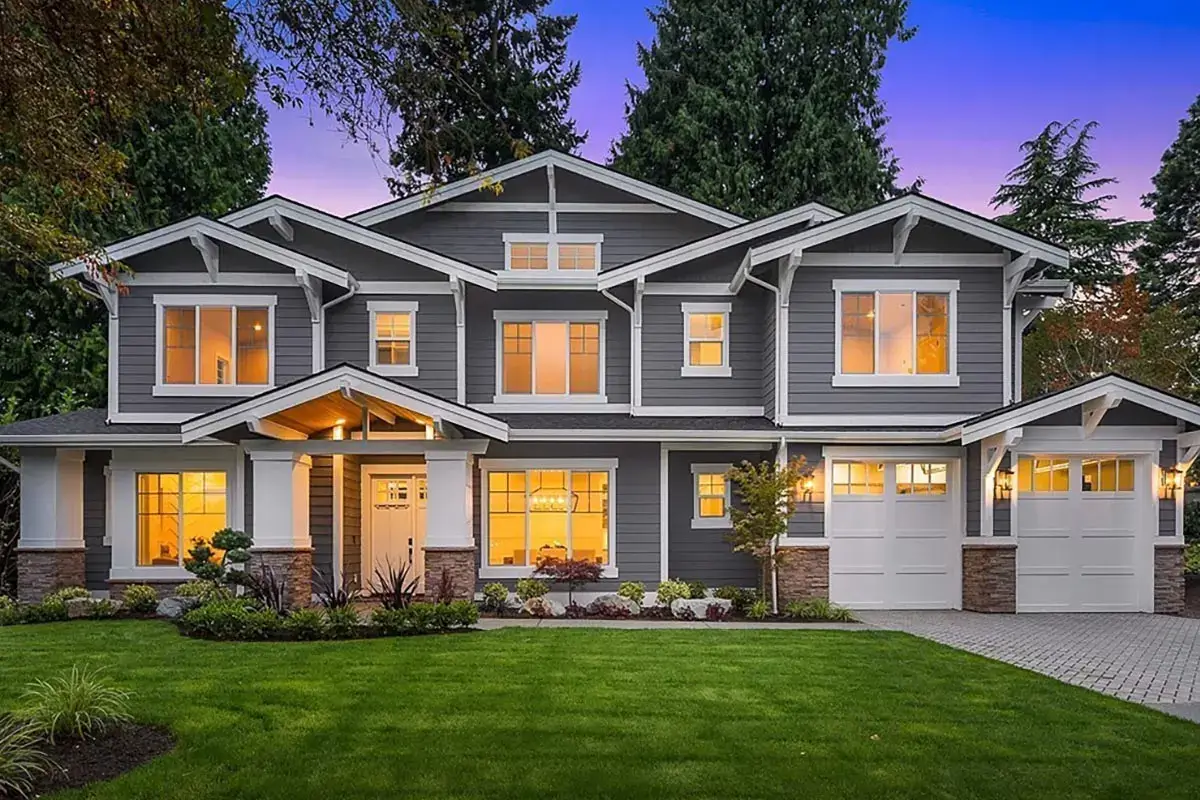
Pull up to almost any 1990s subdivision in Pearland and you'll see it — original vinyl siding going chalky at the south-facing gables, paint peeling where the caulk failed years ago, a few boards bowing out where moisture snuck in behind them. The homeowners aren't neglectful. Houston just works on materials in ways that most other climates don't, and siding absorbs the full punishment: UV index that regularly cracks 11 in July, humidity that sits above 70% for months at a time, and wind-driven rain that can come in sideways at 80 mph when the Gulf decides to remind you it's there.
If you're looking at your home's exterior and thinking something needs to happen before the next storm season, you're asking the right question at the right time. But the answer isn't just "pick a siding and install it." The material choice, the prep work underneath, and the installation method all interact — and getting one wrong makes the other two irrelevant.
The Three Realistic Options and What Houston Does to Each of Them
Fiber cement, vinyl, and engineered wood are the three materials worth discussing for most Houston homes. There are others — steel, stucco, brick veneer — but those are separate conversations with separate cost structures. Here's an honest look at what you're actually choosing between.
Fiber cement (James Hardie is the dominant brand) is the workhorse of Houston remodeling for good reason. It holds paint well, resists moisture, and doesn't warp when it cycles between a 98°F afternoon and a soaking overnight rain. Installed with the right clearance off grade and properly caulked at every penetration, it genuinely outlasts most of the other options in this climate. The trade-off: it costs more upfront — typically $12–$18 per square foot installed on a standard two-story — and it's heavier, which matters on older homes. It also needs repainting every 10–15 years. The factory finish buys you time, but it's not permanent.
Vinyl is the budget-friendly option, and that's not a knock — budget matters. At $6–$10 per square foot installed, it makes sense in certain situations, particularly if you're selling in two years and need the curb appeal without the capital outlay. The problem in Houston is UV degradation. Cheaper vinyl goes brittle after a decade of our sun, and brittle vinyl during a hurricane is a liability, not just an aesthetic issue. If you go vinyl, spend the extra money on thicker profile (at least .044 inches) and a product with a genuine UV inhibitor — not just a marketing claim on the box.
Engineered wood (LP SmartSide is the main player) lands in between. It looks closer to natural wood than fiber cement does, takes paint well, and costs roughly $9–$14 per square foot installed. The honest downside: it's more sensitive to installation errors than fiber cement. If the bottom edge isn't properly sealed or it's installed too close to grade, moisture finds it fast. In a place where we regularly see 6 inches of rain in a single afternoon — ask anyone who lived through Harvey in 2017 — that margin for error is real.
What the Wall Underneath Actually Tells You
Here's something that doesn't make it into most siding articles: the material you pick matters less than what you find when the old siding comes off.
I've watched crews pull T1-11 off a 1978 ranch in the Heights and find OSB sheathing that had been wet so long it had the consistency of wet cardboard along the bottom two feet. That house needed new sheathing before it needed new siding — about $2,800 worth of work the homeowner hadn't budgeted for. On a pier-and-beam home especially, the gap between the bottom plate and grade is critical, and in older Houston neighborhoods that gap is sometimes six inches, sometimes three, depending on how much the foundation has moved over the years. When we're doing a full siding replacement, we check that clearance every time, because it determines which products are even appropriate.
The weather-resistant barrier behind the siding matters just as much as the siding itself. Housewrap installed correctly — lapped properly, taped at seams, flashed around every window and door opening — is what actually keeps water out of your wall cavity. Siding is the first line of defense. Housewrap is the last one before your framing gets expensive.
Before any estimate makes sense, a visual inspection of the existing sheathing is non-negotiable. Any contractor who quotes you a siding job without accounting for what they might find underneath is either optimistic or inexperienced.
The Details That Determine Whether the Investment Holds
A few specifics worth knowing before you sign anything:
- Houston's wind-zone requirements under the current residential building code mean fastener patterns and overlap specs aren't optional — they're enforced, and they vary by product. Fiber cement and vinyl have different nailing schedules.
- Permit requirements for full siding replacement vary by municipality. In unincorporated Harris County it's often straightforward; inside Sugar Land or Pearland city limits, expect a more detailed review.
- South- and west-facing walls take the most UV and wind-driven rain. If you're doing a partial refresh rather than a full replacement, start there — not the north face where things look fine.
- Trim and soffit work almost always needs attention when siding gets replaced. Mismatched materials at those transitions are where water finds its way in.
- Factory-primed fiber cement needs to be finish-painted within 180 days of installation. In Houston summers, that window moves fast.
If you're working with an exterior repair and renovation contractor who doesn't bring up any of these specifics, ask about them directly. The answers will tell you a lot.
What a Realistic Budget Looks Like
For a 2,000 square foot single-story home with a straightforward footprint — no dormers, minimal trim complexity — a full fiber cement siding replacement runs roughly $28,000–$42,000 depending on existing conditions and finish choices. Vinyl on the same house is $15,000–$22,000. Engineered wood typically falls in the $22,000–$34,000 range. Those numbers assume a thorough tear-off, new housewrap, and proper flashing — not a nail-over.
Nail-overs (installing new siding directly over old) are cheaper and occasionally appropriate, but they hide whatever is happening underneath. On a Houston home that's more than 15 years old, that's usually a gamble I wouldn't recommend taking.
The goal isn't to spend the most money. It's to spend money once and have it hold through the next 20 years of Gulf Coast weather. Those are different calculations, and the right material choice depends on your specific house, your budget, and how long you plan to stay.
If you're chewing on this and want a straight conversation about what your home actually needs, we offer free consultations — reach out at /request and we'll come take a look.