
Picture your living room on Thanksgiving night. Every chair pulled from every corner of the house, a card table wedged between the couch and the bookshelf, someone eating standing up near the kitchen door because there's nowhere else to go. If that image is too familiar, September is the month to do something about it — not October, not the first week of November when you're already out of time.
Here's the uncomfortable math: a permitted room addition in Houston takes 14–18 weeks from signed contract to final inspection, on a good run. That puts your window for a holiday-ready addition at roughly mid-September start. Every week you wait now costs you on the back end, when it counts.
Why September Is the Real Deadline — Not October
Most homeowners assume they can wait until fall "cools off" to think about construction. Understandable. Right now, in early September, it's 94°F outside with a heat index pushing 106°F. Nobody wants to stand on a back patio and imagine a new sunroom. But here's what that logic gets backwards: the planning phase — design, structural drawings, permit submission — doesn't require good weather. It happens in an office and at a drafting table. The heavy outdoor work happens 6–8 weeks later, ideally in October and November when Houston actually becomes pleasant to build in.
The City of Houston and Harris County permit offices are not fast. Residential addition permits routinely run 4–6 weeks for review, sometimes longer if the drawings come back with corrections. Sugar Land and Pearland have their own municipal offices with their own review queues. You cannot rush that clock by throwing money at it. What you can do is get your application in before the October backlog builds, when every other homeowner who procrastinated in September is submitting at the same time.
Start the conversation now, while it's too hot to enjoy your yard anyway.
What a Holiday Addition Actually Costs and Looks Like on the Ground
Before getting into timelines, let's be honest about scope, because "home addition" covers a lot of ground.
A basic bump-out — extending an existing room by 10–12 feet to create a proper dining area or a guest suite — typically runs $55,000–$85,000 in the Houston market right now, depending on finish level and foundation type. A full second-story addition over a single-story slab home is a different conversation entirely: $180,000 and up, with structural engineering fees that can add $4,000–$6,000 before a single board gets cut.
For holiday hosting specifically, the additions that get the most use are:
- Expanded great rooms or dining rooms — removing a wall between existing spaces and extending the footprint 8–12 feet outward
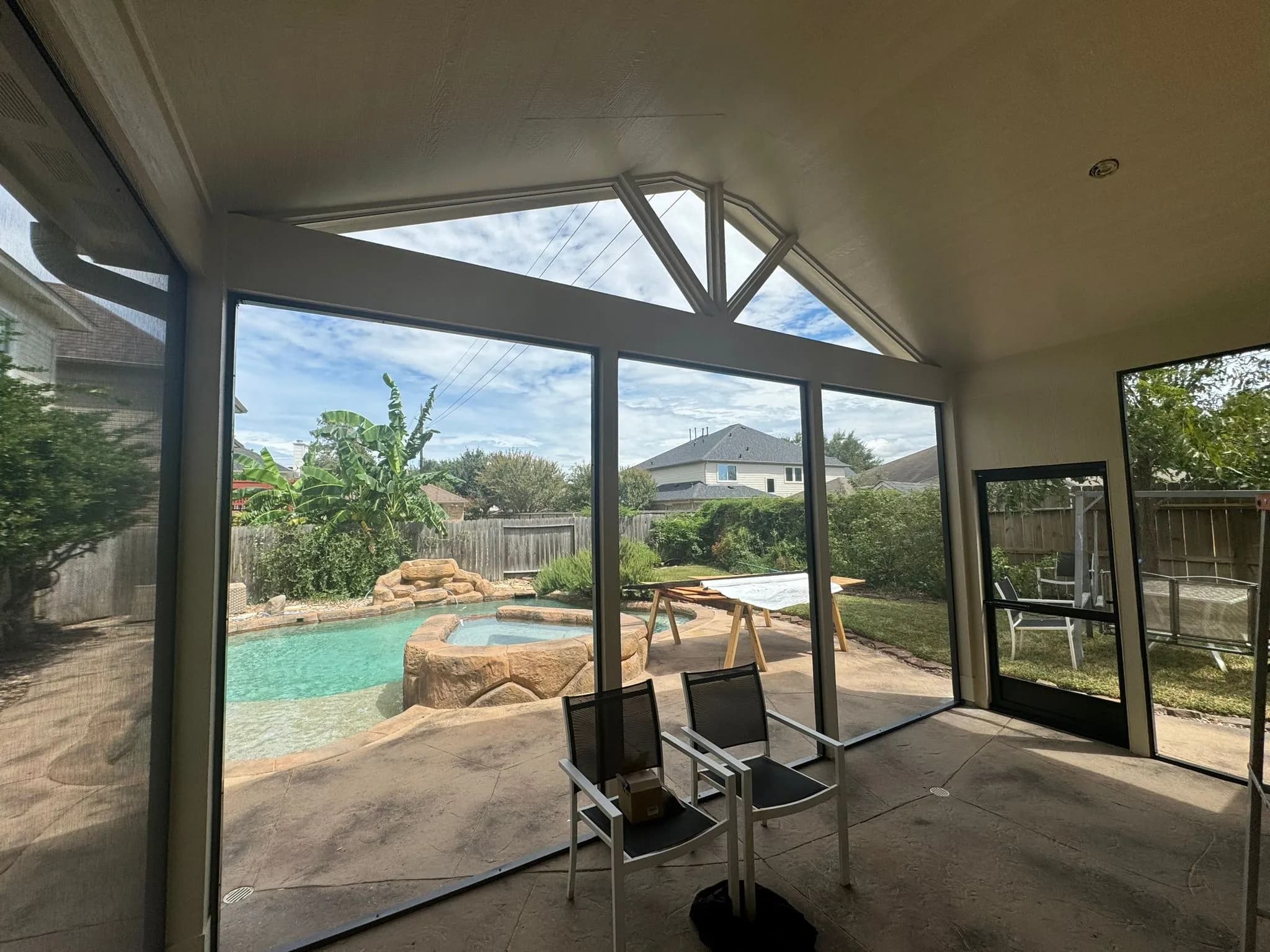
- Covered rear additions that bring outdoor entertaining under conditioned, enclosed space
- Guest suites — a bedroom and bath addition so out-of-town family isn't sleeping on your couch
- Flex rooms — a finished addition that works as both a playroom during the visit and a sitting room the rest of the year
The guest suite is worth flagging separately. A 250–300 sq ft addition with a private bath is the one addition I've watched pay emotional dividends for years. Extended family can come for five days instead of two without everyone going quietly crazy. That's not a small thing.
What the Site Actually Tells Us Before We Start
Here's where experience matters more than enthusiasm. Not every Houston home can take an addition without some preliminary work that surprises homeowners on the budget side.
Older homes in the Heights, Montrose, and similar pre-1970s neighborhoods often sit on pier-and-beam foundations. Adding square footage to a pier-and-beam home means engineering the new load path so the addition doesn't torque the existing structure — that may mean adding or shimming piers before the framing even starts. We've walked into projects where the existing floor was 1.5 inches out of level across 20 feet, which the homeowner had never noticed but which the addition would have made dramatically worse if we'd ignored it.
Slab homes — the dominant build type in Katy, Sugar Land, and most post-1980 Houston suburbs — have their own constraints. The slab edge condition determines where and how we can tie in a new footing. Most slab additions require a thickened-edge footer that ties into the existing grade beam, which means a soil inspection and sometimes a compaction test if the lot has had significant drainage work done (more common than you'd think after the drainage improvements a lot of Sugar Land neighborhoods saw post-Harvey). That inspection adds time. Budget it.
Neither of these is a reason not to do the addition. They're reasons to start early, get eyes on the site, and know what you're actually dealing with before October.
How to Move Quickly Without Moving Carelessly
The goal isn't to rush. It's to compress the decision and design phase, so the permitted construction phase lands in the right weather window. Here's what that looks like in practice:
- Week 1–2: Site visit, scope definition, preliminary budget range. This is the conversation that keeps people from designing a $140,000 addition on a $75,000 budget.
- Week 3–4: Architectural or design drawings produced and reviewed.
- Week 5–6: Permit application submitted. This is the moment where your patience matters most — the clock is in the city's hands now.
- Week 10–12 (estimated): Permit approved, construction starts. Framing, MEP rough-ins, inspections.
- Week 16–18: Final inspection, punch list, certificate of occupancy.
That gets you to a finished, code-compliant, usable addition by late November or early December — tight, but real, if you start this month.
The one honest trade-off to name: a faster design phase means fewer rounds of revision. If you want to iterate extensively on the floor plan, add three weeks. That's not a criticism — some decisions deserve that time — but it's a trade-off between getting exactly what you envisioned and getting something very good before Thanksgiving.
If you're thinking through any of this — whether the scope makes sense, whether your foundation type changes the math, what a realistic budget looks like for your specific neighborhood — we offer free consultations and we'll tell you the truth about the timeline. Request one here before the September calendar fills up. The heat isn't going anywhere for a few more weeks, but the planning window is.