
The week after Beryl knocked out power to roughly 900,000 CenterPoint customers in July 2024, we were fielding calls from homeowners in Sugar Land and Pearland who had spent four days in 97-degree heat with a portable generator running an extension cord to a box fan. Most of them wanted the same thing: "Just make sure this never happens again." That's a completely reasonable goal. The problem is that "backup power" means something very different depending on which product you're looking at, and the installation side — permits, gas lines, transfer switches, concrete pads — is where most homeowners get surprised.
So let's cut through it.
The Actual Difference Between These Two Systems
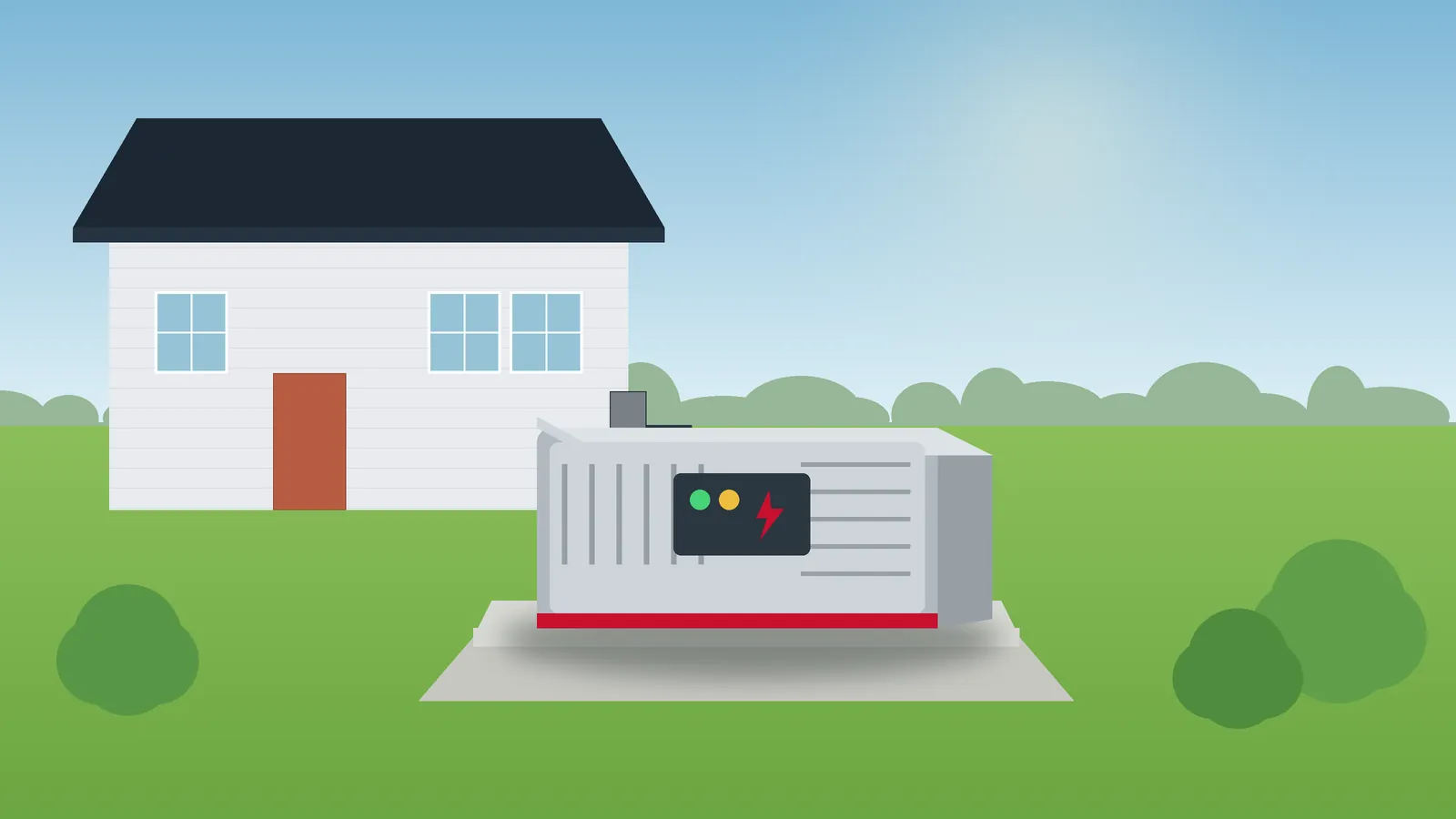
A whole-home standby generator is a permanently installed unit, typically natural-gas or propane-fed, that sits on a concrete pad outside your house and monitors utility power continuously. When the grid drops, it starts automatically — usually within 10–15 seconds — and runs your entire electrical panel. A 22-kilowatt Generac or Kohler unit can handle a 2,400-square-foot house with central AC, refrigerator, lights, and well pump running simultaneously without breaking a sweat. You don't go outside. You don't flip a switch. The lights just flicker and come back on.
A partial-circuit backup system — sometimes called a "managed whole-home" or transfer panel setup — uses a smaller generator (often 7.5–13 kW) paired with a transfer switch that only powers a pre-selected subset of circuits. You pick what matters: usually AC, refrigerator, a few outlets, and your security system. Everything else goes dark, but your essential systems keep running. Some newer systems pair this with a battery backup (like a Tesla Powerwall or Briggs & Stratton STANDBY system) to handle shorter outages without the generator cycling up at all.
The honest trade-off: whole-home systems cost more — typically $12,000–$22,000 installed in the Houston metro, depending on unit size and whether a new gas line needs to be run — but they genuinely restore normal life. Partial-circuit systems run $5,500–$11,000 installed and require you to accept some discomfort and discipline during an outage. Neither is wrong. They solve different problems.
What the Permit and Site Work Actually Involves
This is where a lot of homeowners get blindsided, because a generator installation isn't just an electrician dropping a box in your yard. It's a multi-trade project.
On-site, here's what the work typically looks like for a standby installation in a Houston-area home: The generator needs a concrete pad — minimum 3 inches thick, usually 36 inches × 72 inches for a 20-kW unit — set level and positioned per City of Houston or Harris County setback rules, which generally require the unit to be at least 18 inches from the structure and 5 feet from any window or door opening. I've seen installs fail inspection because the homeowner's existing HVAC condensers and a fence ate up all the compliant placement options in the backyard. You have to look at that before you quote the job.
Beyond the pad, you're also looking at:
- A dedicated gas line run from your meter to the generator location (coordinated with CenterPoint or your local gas utility)
- An automatic transfer switch (ATS) installed at your main panel — this is the piece that legally isolates your home from the grid so a lineman working on your street doesn't get killed by back-fed power
- A separate subpanel in some cases, particularly in older Katy or Heights homes where the existing panel is already near capacity
- A permit from the city or county, plus inspections from both the electrical and gas inspector
The permit in Houston proper typically runs $150–$400 depending on the scope. Harris County unincorporated areas have their own schedule. This isn't optional and it's not bureaucratic busywork — the ATS requirement exists specifically because back-feeding killed utility workers after Hurricane Ike.
Timeline from signed contract to final inspection: plan for 4–6 weeks. Supply chain on transfer switches has been erratic since 2022, and inspections in high-volume periods (right after a major storm, predictably) can back up by two weeks on their own.
Where Remodeling and Generator Planning Intersect
Here's something most generator contractors won't tell you, because it's outside their lane: if you're planning any other work on the house — a kitchen update, a home addition, a garage conversion — the generator install should happen in coordination with that work, not independently before or after it.
The reason is load calculation. Adding 400 square feet to a Pearland house with a new bedroom and bathroom changes your electrical demand profile. If you install a 13-kW partial-circuit generator this spring and then add the room addition next year, you may find that the generator can no longer cover the circuits you originally designated. You either live with that limitation or you pay to swap the unit out. We've seen it happen.
The same logic applies in reverse: if you're doing a significant kitchen remodel that involves upgrading your panel from 150-amp to 200-amp service — which is common in homes built before 1990 — that's the ideal moment to rough in the transfer switch location and the conduit run to where the generator pad will eventually go. You're already in the walls. The marginal cost of doing that rough-in during a remodel is a fraction of what it costs to open things back up later.
This is the kind of coordination that a remodeling contractor and an electrical sub need to be talking through together from day one, not figuring out separately and handing off to the homeowner to reconcile.
What to Actually Decide Before You Call Anyone
Before you get a quote, get clear on these four things:
- What do you genuinely need to keep running? Just the fridge and a few fans is a different answer than "the whole house, including my home office and my spouse's medical equipment."
- Do you have natural gas service? Propane is an option but adds tank infrastructure and ongoing fuel management. Many Sugar Land neighborhoods have gas; some newer developments in Fort Bend County don't.
- Is there a logical pad location that meets setbacks? Walk your own yard before the first conversation. Fence lines, HVAC units, and easements eat up options fast.
- What other work are you planning in the next 2–3 years? If a room addition or panel upgrade is already on your list, coordinate now.
A backup generator is one of the higher-return investments you can make on a Houston home — not just for comfort, but for buyer perception if you ever sell. Homes in flood-prone zip codes near Brays Bayou or Clear Creek regularly get asked about backup power in the inspection period. It's become a real line item.
If you're chewing on this and want a second set of eyes on what your specific house and site can accommodate, we offer free consultations — reach out here and we'll get someone out to you who's looked at this exact problem on a few hundred Houston homes.