
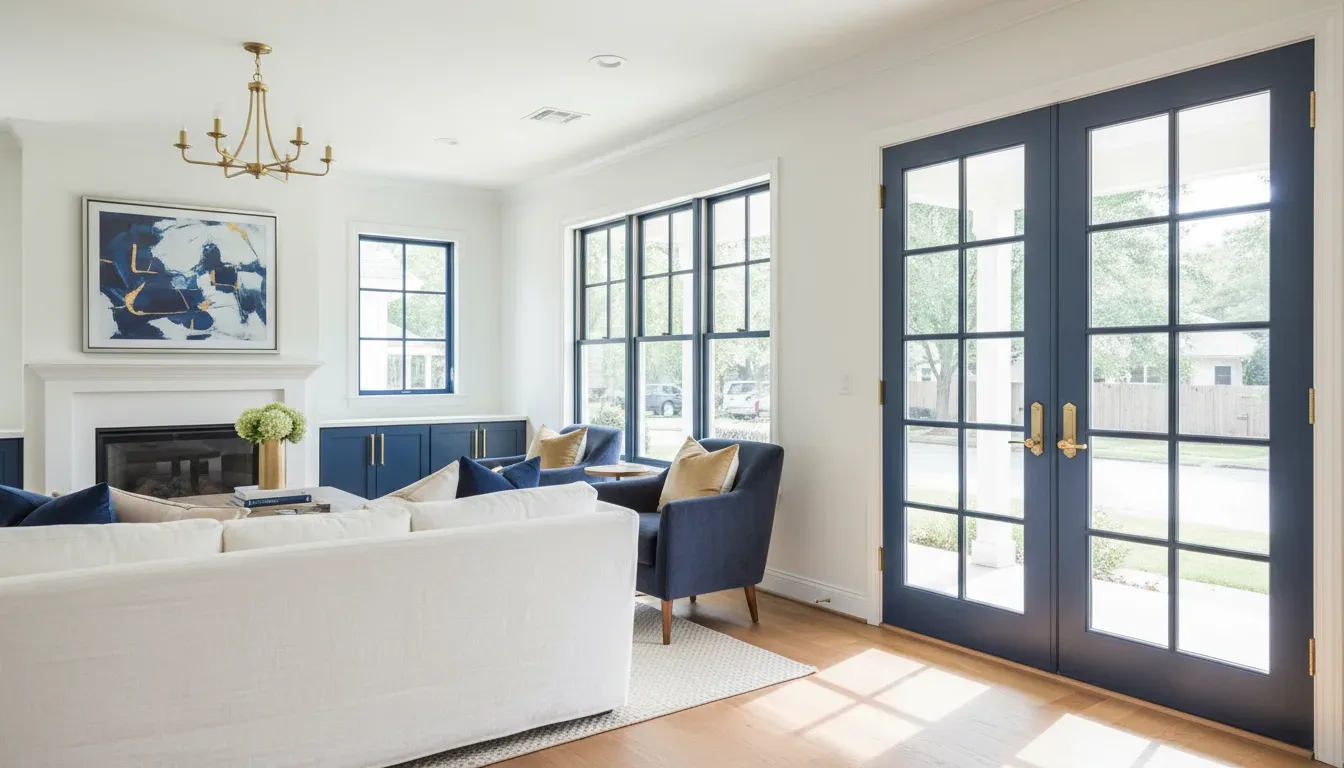
The day before Beryl made landfall in July 2024, I watched a Pearland homeowner taping X's across his single-pane windows with blue painter's tape. He'd seen it done in an old movie. Tape does nothing — not against a Category 1, not against a tropical storm, not against a flying two-by-four moving at 90 miles per hour. What it does is give you something to do when you feel helpless. I understand the impulse. But if you're standing in that same spot right now, a week past the solstice and watching the Gulf, there's a better use of your energy than tape and prayers.
Windows and doors are where storms get into your house. Not the roof first — the fenestration. Once a window blows in, pressure dynamics inside the structure change fast, and that's when roofs lift. Every serious wind-mitigation study after Harvey said the same thing. Upgrading your openings is not an aesthetic decision. It's a structural one.
Impact Glass vs. Storm Panels: Name the Trade-Off Honestly
There are two main paths Houston homeowners take, and neither one is obviously right for every situation. Here's what each actually involves.
Impact-rated windows and doors use laminated glass — two panes bonded to an interlayer of polyvinyl butyral or ionoplast resin. When a windborne object hits, the glass may crack, but the interlayer holds. The opening stays sealed. You get permanent protection with no installation steps before a storm, improved everyday noise reduction (meaningful if you're near Beltway 8), and better energy performance that can lower your summer cooling bill in a meaningful way. Installed cost in the Houston metro runs roughly $800–$1,400 per window depending on size and frame material, and a full-house replacement on a 2,200-square-foot Sugar Land home can run $18,000–$32,000.
Storm panels and accordion shutters protect the existing window rather than replacing it. Corrugated aluminum panels cost around $8–$12 per square foot installed. Accordion shutters — the kind that fold flat against the wall and deploy in seconds — run $20–$30 per square foot but are far more convenient. The honest downside: they require action. You have to deploy them before a storm, store the panels somewhere between seasons, and if you're traveling when a system spins up, you're either flying home or leaving your house exposed.
The calculus usually goes like this: if your windows are already 15-plus years old and leaking air at the frames, impact replacement makes financial sense because you're consolidating two problems into one fix. If your windows are newer double-pane units in decent shape, quality shutters can buy you another decade of protection at a fraction of the cost.
What Houston's Building Code Actually Requires (and Where It Doesn't)
Houston sits inside Harris County, which adopted the 2021 International Building Code with Texas amendments — but the city of Houston proper has historically had weaker residential enforcement than, say, Galveston County or Fort Bend County, which have stricter coastal wind-zone provisions. If your home is in an unincorporated Harris County community or a neighborhood that predates wind-zone adoption, your original windows may have been installed to no meaningful impact standard at all.
Here's what matters practically: any permitted window or door replacement in the City of Houston must now meet the wind-speed requirements for the local climate zone, which for most of the metro means products rated for 130 mph or higher. Your contractor needs to pull a permit for this work. If they suggest skipping it, walk away.
On-site, this matters in ways you don't see from the street. Older homes in the Heights and Montrose — the 1920s–1950s craftsman and bungalow stock — often have non-standard rough opening dimensions. A 36-by-48 window in a 1948 frame might be 35-and-a-half by 47-and-three-quarters in actual measurement, and impact units are manufactured to specific sizes. We've had jobs in the Heights where we spent a full day shimming and rebuilding rough openings before a single window went in. That labor is real and it belongs in your bid — if a quote doesn't itemize rough opening work, ask why.
Here's a short checklist of what a legitimate impact window/door project should include:
- Pull a City of Houston or Harris County building permit before work starts
- Product documentation showing Miami-Dade NOA (Notice of Acceptance) or Texas Department of Insurance approval
- Itemized rough opening inspection and repair, not just swap-and-go
- Proper flashing and sealant — particularly critical in Houston's driving-rain conditions, where water infiltration after a storm is as damaging as wind
- Final inspection sign-off before the permit closes
Skip any one of these and you may have a window that looks fine and fails your insurance inspection when you actually need the discount.
The Insurance Argument Is Real, But Read the Fine Print
Texas homeowner's insurance has been a mess since Harvey, and carriers have gotten specific about what earns a wind-mitigation credit. Impact-rated openings — windows and doors both — can reduce your windstorm premium meaningfully, sometimes in the range of 15–30% depending on your carrier and coverage zone. For a Katy homeowner paying $4,800 a year for wind coverage, that's real money.
The catch: the discount typically applies only when all openings are protected. One unprotected garage door eliminates the credit for most carriers. Garage doors are a separate conversation, but don't overlook them when you're budgeting. A wind-rated garage door runs $1,500–$3,500 installed and is often the cheapest single upgrade you can make to qualify the whole house.
Get your current policy out and call your agent before you finalize a scope of work. Ask specifically what documentation they require — some want a licensed inspector's wind-mitigation report, not just your contractor's invoice. Know what you're documenting before the project starts, not after.
Upgrading fenestration isn't a panicked storm-season purchase. Done right, it's a 20-to-30-year investment that makes your house quieter, cheaper to cool, and genuinely safer through whatever the Gulf throws at us next. The tape-on-the-window approach is understandable. It's just not a plan.
If you're chewing on any of this — scope, sequencing, what your specific house actually needs — we offer free consultations at /request. Our exterior repair and renovation work covers exactly this kind of project, and we can tell you pretty quickly whether your situation calls for full replacement, shutters, or something in between.