
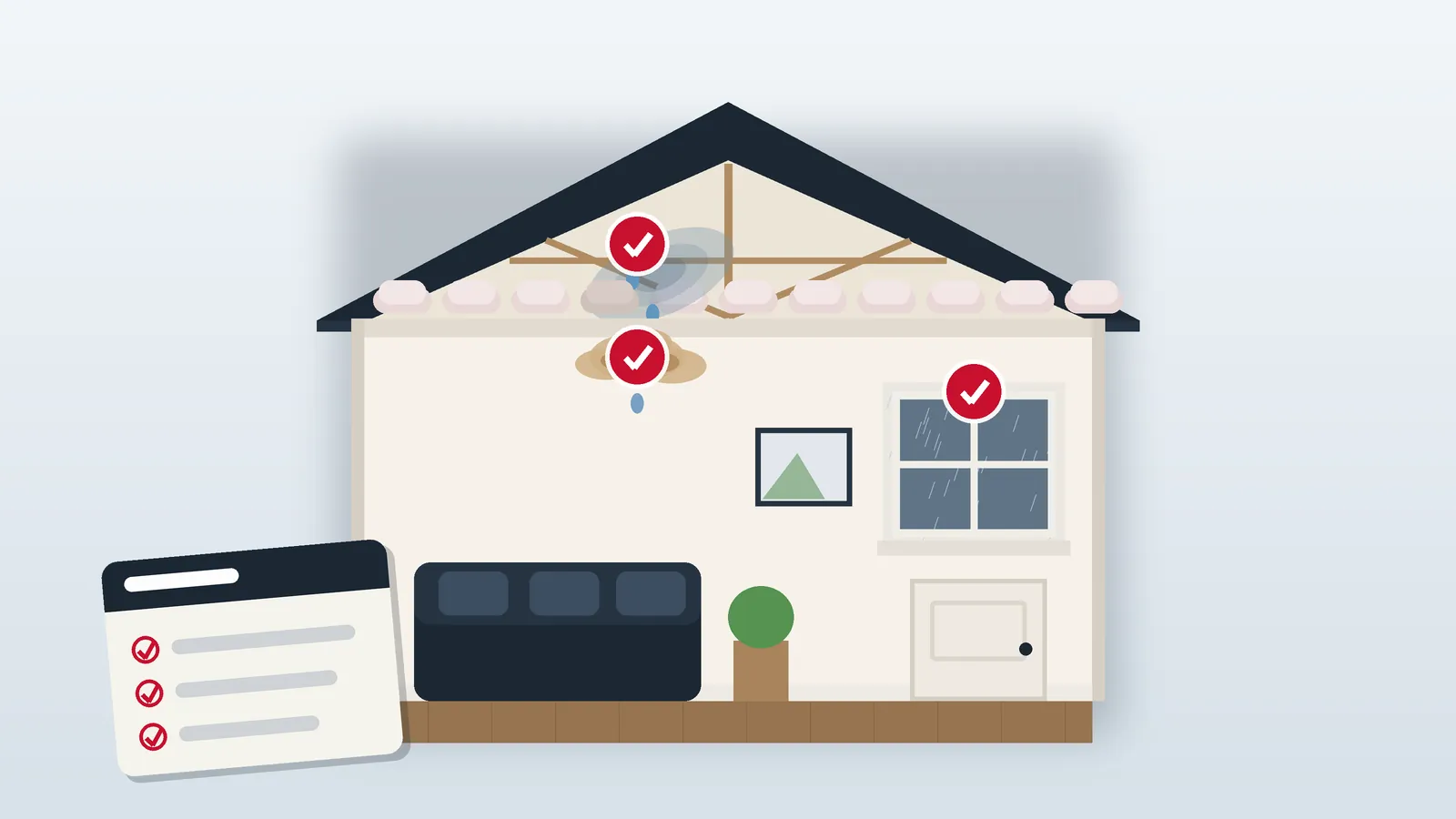
Most Houston homeowners do the same thing after a storm passes: walk the yard, check the roof from the driveway, peel the wet towels off the windowsills, and move on. That's understandable. You're exhausted. But the real damage — the kind that compounds quietly until the next event turns a nuisance into a $30,000 problem — lives inside the walls, under the floors, and in the attic. We're deep in the 2026 Atlantic season right now, and if anything spun up between June and today hasn't put your house on your mental checklist, this is your reminder to go look.
Not at the roof. Inside.
What the Attic Will Tell You That Nothing Else Will
The attic is the first place water gets in and the last place homeowners look. I've walked through homes in Meyerland and the Heights where the downstairs ceiling looked fine for months after a wind event — right up until the drywall buckled during the next rain. By then there was active mold in the insulation, and what would have been a $600 repair became a three-week remediation job.
Go up there. Bring a flashlight and wear a mask. You're looking for:
- Staining on the roof decking — brown rings or dark streaks along the rafters mean water has been moving, even if it dried out.
- Compressed or wet insulation — fiberglass batts that have clumped together have lost their R-value and are probably holding moisture.
- Daylight — if you can see sky through the decking anywhere, the conversation is over. That needs a contractor, not a tube of caulk.
- Soffit vents that are packed with debris — wind drives leaves and roofing granules into these and kills your attic ventilation, which matters a lot in a city where July heat indices sit above 110°F.
The attic also gives you a second look at your insulation situation. Houston's climate code calls for R-38 in attic spaces under the current IECC adoption, and a lot of homes built before 2000 are sitting at R-19 or less. A storm isn't going to fix that, but a storm is a good reason to finally address it.
Reading Your Walls and Floors for What Last Season Left Behind
Structural movement after a storm is subtle on the interior, and most people don't connect the dots until they're standing in a kitchen that suddenly has a door that won't close anymore. That's not a door problem. That's a foundation problem, and in Houston, pier-and-beam homes in areas like Eastwood, Montrose, and Garden Oaks are especially susceptible after the soil saturation cycles that come with heavy events.
Stand in each room and look at the walls along the ceiling line. Fresh diagonal cracks running from window corners at roughly 45 degrees — particularly if they've appeared or widened since last fall — suggest differential settlement. Small hairline cracks in plaster or drywall are usually cosmetic, but cracks you can fit a quarter into are telling you something moved.
On pier-and-beam houses, go under the house if you can do it safely. Look at the wood sills where they rest on the piers. After sustained wet periods — and Harvey and Beryl both soaked this city for days at a stretch — the wood can rot from the bottom up while the floor above still feels solid. Soft spots in the floor, especially near exterior walls, are worth investigating before you plan any kind of interior remodeling or general renovation project over them. There's no point finishing a floor over a failing substructure.
For slab foundations, the checklist looks a little different. Run your eye along the base of every wall at floor level. Gaps between the baseboard and the floor that have opened up since installation, or tile grout lines that have cracked in a pattern following the room's long axis, both suggest the slab has shifted. Neither one is a catastrophe by itself. Together, after a wet spring, they're worth getting an eye on before peak season continues.
The Interior Moisture Check Most People Skip
Water doesn't announce itself. It moves behind drywall, pools under vinyl plank, and hides in cabinet toe-kicks for months. By the time you smell it, you're already behind.
The most useful thing you can do right now is a slow, methodical walk through every room with your hand on the exterior walls. Not a quick press — hold your palm flat against the drywall for a few seconds in each corner. Walls that have been holding moisture will feel cooler or slightly soft compared to the dry wall nearby. Pay special attention to the wall below any window that you've ever seen weep or fog during a storm.
Check under every sink. Pull the cabinet doors open, move the cleaning products, and look at the floor of the cabinet with a flashlight. Staining, warping, or a soft floor panel under a sink almost always means the supply line connection or the drain has been weeping for a while — often made worse when a pressure spike follows a storm event.
Bathrooms deserve a specific note. Caulk around tubs and shower pans fails quietly, and once water is moving behind the tile surround, it can rot the subfloor and framing in a matter of months. Press on the tile 6–8 inches out from the tub edge. Tile that flexes or feels hollow compared to the field tile nearby means the thinset bond underneath has broken down and water is behind it. That's not a caulk job. That's a bathroom renovation conversation.
Before the Next System Forms
The window between storms is the only time you have real choices. Once something is churning in the Gulf, you're in reaction mode — and reaction mode is where the expensive decisions get made badly.
A mid-season interior audit takes about two hours if you do it methodically. Most of what you find will be nothing. Some of it will be small things you can handle yourself — a fresh bead of silicone here, a replaced supply line there. But occasionally you find the thing that would have turned a category-1 roof leak into a category-2 interior disaster, and that's the whole point.
If you go through this list and something stops you — a crack you don't understand, insulation that's clearly been wet, a floor that's doing something new — we're glad to take a look. We offer free consultations, and mid-July is exactly the right time to have that conversation before the season gets busier. Start at /request and we'll get back to you quickly.