
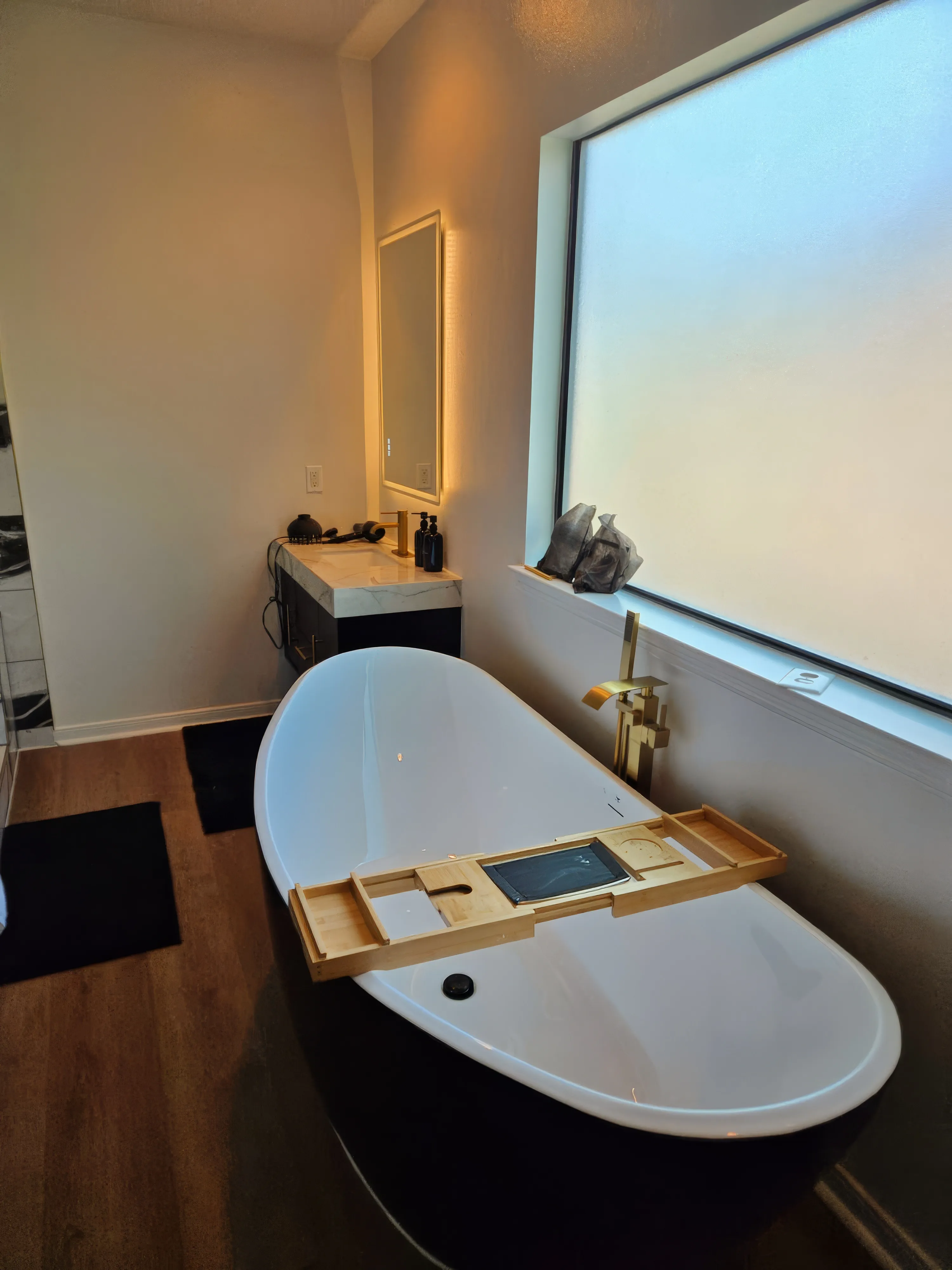
The homeowner in Pearland had a vision: a freestanding soaking tub, frameless glass shower, double vanity with warm LED mirrors. She had a $28,000 budget. She also had a 1987 slab house with a 4-inch drain line running almost dead-center under where the new tub was supposed to sit. Nobody had looked at that before the tile was picked. By the time we figured it out on demo day, rerouting the drain added $3,200 and two weeks to a project that was already scheduled tight. The tub moved 18 inches left. The vision survived, barely. The timeline didn't.
That story is not unusual. It's basically the default for primary bathroom remodels in Houston when the planning phase gets skipped or rushed. And right now — May, with summer bearing down — is exactly when people are making these decisions in a hurry, trying to get a project wrapped before August turns every afternoon into a heat index of 108°F and nobody wants workers trooping through the house. The impulse to move fast is understandable. Moving fast without planning is how you end up rerouting drain lines on demo day.
Here's how to actually plan this right.
Figure Out Your Scope Before You Talk to Anyone
The biggest planning mistake isn't picking the wrong tile. It's not knowing whether you're doing a cosmetic refresh or a full gut — and treating them like they're the same conversation.
A cosmetic refresh in a primary bathroom — new fixtures, new vanity, paint, maybe a mirror upgrade — can run $8,000–$15,000 and take 2–3 weeks. A full gut remodel that moves plumbing, replaces the shower pan, installs radiant floor heat, and reconfigures the layout will run $25,000–$55,000 and take 6–10 weeks depending on material lead times and permit processing. Those are not the same project. They don't use the same contractors, don't require the same permits, and shouldn't be planned on the same timeline.
Before you call anyone, answer these four questions honestly:
- Are you moving any plumbing? (New tub location, separate shower, relocated toilet — all require permits in Harris County and most surrounding municipalities.)
- Are you touching the shower pan or anything behind the walls? (If yes, budget for waterproofing inspection and potentially a moisture assessment if your home is pre-2000.)
- Are you staying in the footprint or expanding? (Bumping into a closet or hallway changes the structural conversation entirely.)
- What's your real number — not your wish number? (The number where, if the contractor says it, you actually sign. Not the number you tell yourself before you've gotten a single bid.)
Scope clarity up front is what separates the projects that land close to budget from the ones that spiral. It's also what lets a remodeler give you a real number instead of a placeholder.
What Houston Homes Actually Throw at You
I've been inside a lot of primary bathrooms in Katy, Sugar Land, the Heights, and Pearland. The single most consistent surprise is what the slab does to plumbing flexibility. Houston's clay soil moves. Foundations shift. Drain lines that were perfectly sloped in 1995 may have developed low spots or partial blockages by now, and nobody knows until demo day — unless someone bothers to camera the drain before the project starts. We do it as standard practice now. Costs about $200 and has saved us from surprises that would have cost ten times that.
The other thing Houston throws at you is moisture. A shower that was tiled directly over cement board with no waterproof membrane — totally common in homes built before 2005 — is a mold event waiting to be discovered. When you pull that tile, you may find wet framing or compromised substrate. It's not a disaster; it's a repair. But it takes time and money that wasn't in the original scope, which is exactly why your budget needs a contingency line. Not 5%. Ten percent minimum on any full gut in a house older than 20 years.
One more quirk worth knowing: the City of Houston issues its own permits, but if you're in an MUD — Municipal Utility District, which covers huge swaths of Katy, Sugar Land, and Pearland — your permit authority may be the county or the MUD itself. This affects inspection scheduling and sometimes which code edition is being enforced. A contractor who only works inside the Loop may not know this. One who works the suburbs regularly does.
Sequencing the Work So You Don't Sleep in the Guest Bathroom Longer Than Necessary
Order matters in a bathroom remodel more than almost any other room. Here's the sequence that minimizes downtime and rework:
- Demo and rough inspection. Everything comes out. Drain camera happens before demo if it hasn't already. Any moisture or structural issues surface here.
- Rough plumbing and electrical. Move drain lines, rough in new supply lines, run circuits for new lighting, exhaust fan, and any heated floor system. This is the permit inspection phase in Harris County — no tile goes in until rough-ins pass.
- Waterproofing and substrate. Shower walls and floor get a proper membrane system. This is not optional in Houston's humidity. Schluter or a comparable system applied correctly, not just RedGard brushed on as an afterthought.
- Tile. Floor first, then walls. Large-format tile (anything over 12x24) requires a flatter substrate and more care on a slab that may have minor undulation.
- Vanity, fixtures, and glass. Frameless shower glass goes in late — it's custom-templated to the finished tile, not the rough opening.
- Trim, mirrors, accessories, final paint. Last 10% of the work, first 40% of what you'll photograph.
Skipping or compressing steps 2 and 3 to save time is how you get a beautiful bathroom that leaks into your subfloor in 18 months.
The Budget Conversation Nobody Wants to Have
You can absolutely get a primary bathroom that reads as high-end without spending $50,000. The trade-off is honest: you get there by making smarter material choices, not by cutting labor or skipping inspections. Porcelain tile that reads like marble costs $4–$8 per square foot. The actual marble costs $18–$35. The installation labor is identical. That's a real place to reclaim budget. Prefab shower niches instead of custom tile insets. A quality semi-custom vanity cabinet instead of fully custom millwork. A freestanding tub in a standard acrylic finish instead of the stone resin version.
What you shouldn't cut: waterproofing, licensed plumbing, electrical permits, and the contingency. Those are the things that protect the investment in everything else.
If you're working through what's realistic for your home, our bathroom remodeling services page walks through how we approach scope and pricing in the Houston market. And if you're ready to put numbers to your actual project, we offer free consultations — request one here and we'll come look at what you're actually working with before anyone starts picking tile.