
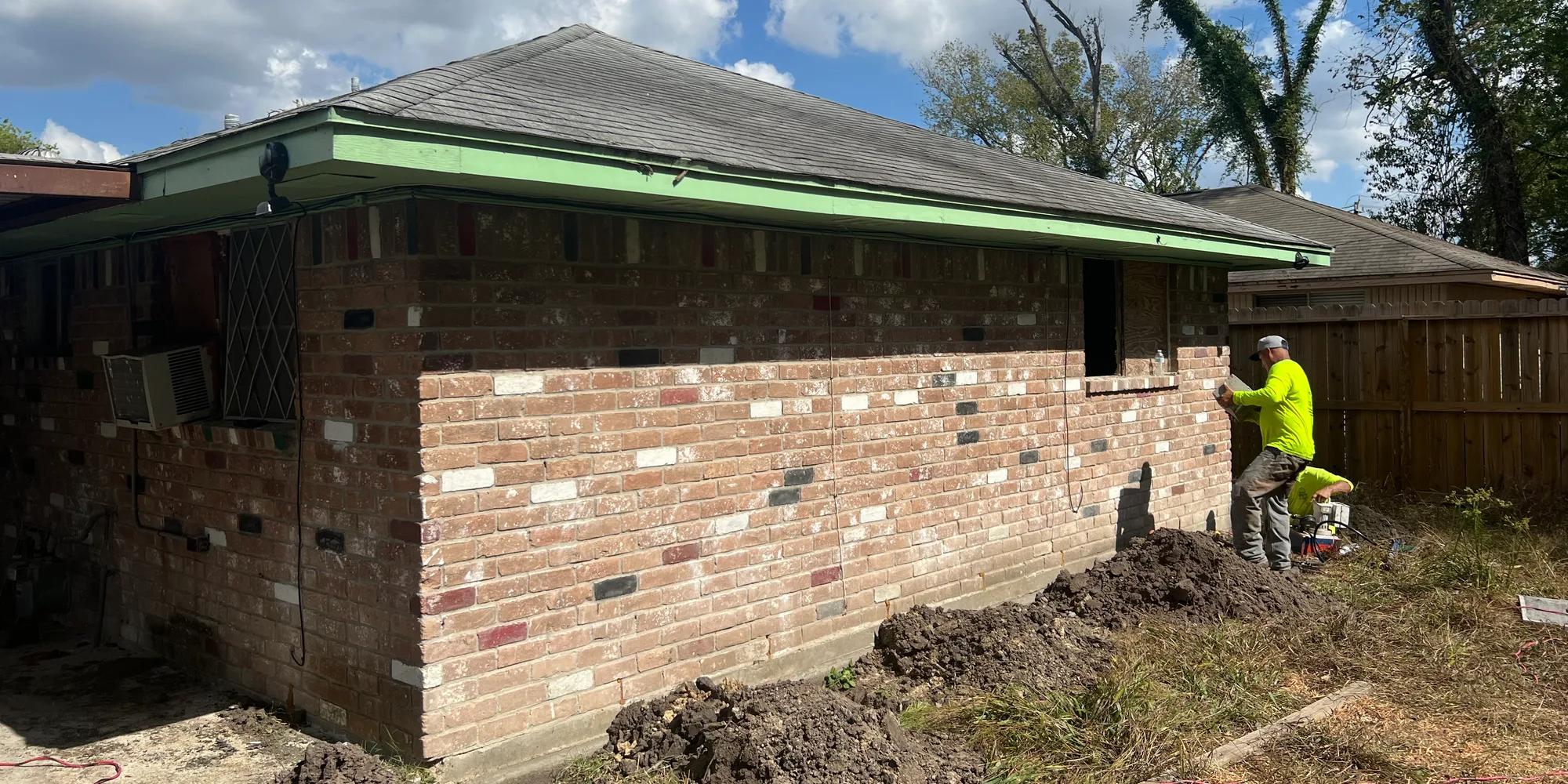
The first sign is usually a door that stopped latching sometime in July. Then a crack runs diagonally from the corner of a window frame. By the time a homeowner in Pearland or Katy calls a foundation contractor, they've often been watching these symptoms for a year, telling themselves it's nothing. It is something. And now that they've finally scheduled the repair, most of them have no idea what happens next — not just under the slab, but inside the house, in the yard, and to the finishes they care about.
Foundation repair in Houston is common enough that it barely registers as news. The Beaumont clay that sits under most of Harris and Fort Bend County shrinks as it dries and swells as it wets, and on a bad site that cycle moves a slab edge an inch or more between a dry August and a wet spring — sometimes dramatically, as we all relearned after Beryl soaked the region in 2024 following years of drought cycles. That movement is what breaks your doors and cracks your tile. Fixing it is a real process with real disruption, and the homeowners who come out of it with the least damage to their stress levels and their finishes are the ones who understood what was coming before the crew showed up.
This post is about preparation. Not about which pier system is best, not about whether to use a hydraulic or pressed pile — your foundation engineer handles that. This is about what you, as the homeowner, need to do in the two weeks before work starts, and what you need to understand while it's happening.
Why Houston Clay Makes Foundation Prep Non-Negotiable
Most of the country treats foundation repair as a rare event. Here, it's a maintenance category. Texas does not license foundation repair contractors at the state level. The legislature has taken up bills to create one more than once and never passed them, so the vetting falls to you: ask for the engineer's report, the pier specification, and the warranty terms in writing before you sign. Any contractor worth hiring will also tell you that the soil condition at your site on the day work begins affects the outcome of the repair.
That matters for prep because one of the biggest mistakes homeowners make is scheduling foundation work immediately after a wet spell without managing soil moisture in advance. If the clay is already saturated, the piers go in at the high point. When the soil dries, the slab settles back down — past the corrected position. The repair effectively gets undone by normal Texas weather. A good contractor will read the soil and may delay; a great homeowner manages moisture proactively in the weeks before the job.
Soil Moisture Management Starts Two to Four Weeks Out
If your foundation is differential — meaning one side has dropped while another stayed level, which is the most common presentation in Houston — you want the soil moisture to be as uniform as possible when the piers are installed. That means watering the dry side of the house consistently in the weeks before repair if you're in a dry stretch, and stopping supplemental watering if the soil is already wet.
The goal isn't magic. It's just reducing the gap between the high and low sides before the crew lifts. Contractors use soaker hoses set 18 inches from the foundation perimeter and run them 30–45 minutes every other day. If you don't own soaker hoses, buy them — it's maybe $60 at any Houston-area hardware store and it's worth it. Stop watering 3–5 days before work begins to let the surface firm up for equipment access.
This step gets skipped constantly. I've watched homeowners spend $20,000–$45,000 on a full perimeter repair and then wonder six months later why they still have movement. Sometimes it's the soil management, or the lack of it.
What to Clear Inside the House — and Why It Matters More Than You Think
The slab is going to move. That is the point. When a hydraulic pier lifts a depressed section back toward level, everything attached to that slab moves with it. Walls crack. Tile grout pops. Cabinets that have been racked for three years suddenly rack in the other direction. This is expected and, within limits, normal. What is not normal is a heavy bookcase falling on a repair crew, or a china cabinet that wasn't secured shattering because the floor shifted 1.5 inches in 90 seconds.
Clear these items before work starts:
- All freestanding furniture within 6 feet of any interior wall that runs parallel to the repair zone (your contractor will mark these)
- Artwork, mirrors, and shelving hung on walls — especially in older Heights-area homes with plaster walls, which crack more aggressively than drywall
- Items inside kitchen and bathroom cabinets that are fragile or heavy
- Any floor lamps, floor vases, or decorative items over 3 feet tall
- Appliances that sit on casters, particularly in the kitchen
- Anything stored under pier-and-beam homes in the crawl space — the crew needs 24–36 inches of clear working height under there
That last point applies specifically to pier-and-beam homes, which are common in Montrose, the Heights, and older Pearland neighborhoods built before 1970. The crawl space under a pier-and-beam house is not a storage unit during active repair. Clear it completely.
For slab homes — which is most of Houston built after 1970 — the work happens from the exterior, but the interior still moves. The 6-foot clearance rule along affected walls is not excessive.
Exterior Access: Equipment Needs More Room Than You Think
Foundation repair equipment is not small. A typical pier-driving rig is roughly the size of a riding mower, but it weighs considerably more and needs to operate within 2–3 feet of the foundation. That means your landscaping, sprinkler heads, AC condenser, and anything else along the perimeter has to move or be protected.
Before the crew arrives:
- Mark all sprinkler heads within 4 feet of the foundation perimeter with flags (the orange kind used for utility marking work fine)
- Remove or protect low shrubs along the repair side — crews will try to work around established plants, but a Holly or Indian Hawthorn that's been there since 2004 may not survive heavy equipment rolling past it twice a day
- Temporarily relocate outdoor furniture, decorative pots, and garden lighting
- If your AC condenser sits within 6 feet of a repair zone, ask your contractor whether it needs to be shut off or repositioned — most don't require repositioning, but the contractor needs to know it's there
- Clear a path from the street to the work area at least 5 feet wide — if you have a gate, leave it unlocked and prop it open
If you have a fence that blocks exterior access to the back or side of the house, ask your contractor early whether panels need to come down. Most wood privacy fence panels can be temporarily removed and reinstalled in a few hours, but it needs to be coordinated before the crew shows up.
The Plumbing Tests: Before and After
This is the step that homeowners consistently underestimate. When a slab moves — especially when it's lifted — it stresses underground plumbing. Cast iron lines that have been resting in a depressed position for years can crack when the slab is lifted back toward level. PVC lines under a 1990s Sugar Land slab are more flexible, but they're not immune.
A reputable foundation contractor should perform or recommend a hydrostatic plumbing test before work begins. The test pressurizes the drain lines from below and identifies any leaks that already exist — before the repair creates any new ones. This matters because if you don't test before, and a leak is discovered after, there's no clean way to establish whether the repair caused it or whether it was pre-existing. Post-repair tests are equally important for the same reason.
What this looks like on-site: a plumber inflates a test ball at the main cleanout and fills the drain system with water to a level that covers all the lines under the slab. The crew watches the water level for 15–30 minutes. If it drops, there's a leak. This costs $200–$400 and is worth every dollar. We recommend it on every slab repair we're involved with. If a contractor tells you it's unnecessary, ask them why.
What Cosmetic Damage to Expect — and Not to Repair Until After
The slab moves. The house moves with it. Expect new cracks in drywall, particularly at door and window corners. Expect tile grout to crack or pop in the repair zone. Expect some doors to temporarily swing open or refuse to close — the inverse of what they were doing before. This is the house adjusting to its new position.
Do not repair any of these cosmetic issues until the foundation has had time to settle. Most contractors recommend waiting at least 90 days before touching drywall cracks or re-grouting tile. The slab continues minor adjustment in that period, and repairs done too soon have to be done twice. If you're planning a broader renovation — a kitchen remodel or a bathroom update — schedule that work after the 90-day window, ideally with a contractor who knows the foundation work has been done and has seen the structural report.
The one exception is if a crack opens wider than ¼ inch after the repair, or if a door becomes completely inoperable. Those are signs of continued movement and need to go back to your foundation engineer, not a drywall crew.
What the Permit Process Looks Like in Harris County
Foundation repair permits in unincorporated Harris County and within the City of Houston limits are required for most structural pier work. The City of Houston's Development Services Department processes these, and turnaround on a foundation permit is typically 5–10 business days if the application is complete. Some foundation contractors pull permits routinely; others try to avoid them. Avoid contractors who avoid permits — not because of the legal risk (though that's real), but because a permitted job includes an inspection that protects you.
The permit cost for foundation work varies by scope but runs roughly $150–$450 for most residential jobs in Houston. That's not a number to negotiate away. If a contractor is quoting you a job and the permit isn't in the line items, ask where it is. If they say it's not needed, get a second opinion.
For concrete and masonry work connected to a foundation repair — like replacing a cracked driveway approach or a section of flatwork that heaved — that may require a separate permit depending on scope.
The 90 Days After: Moisture Management Doesn't Stop at Completion
The repair is done, the crew is gone, and the house is as level as it's been in years. This is not the moment to stop thinking about soil moisture. The post-repair period is when consistent watering — the same soaker hose discipline described above — becomes a maintenance routine rather than a one-time prep task. Houston's summer heat index pushes above 105°F regularly from June through September, and the clay beneath your foundation will shrink aggressively if left dry.
A simple moisture management plan:
- Run soaker hoses 18 inches from the foundation, 30–45 minutes every 3–4 days during dry stretches
- Aim for consistent moisture, not saturated soil — pooling water near the foundation is its own problem
- Redirect downspouts that dump water within 4 feet of the foundation to drain further away, using splash blocks or flex extensions
- Grade soil away from the slab if it's flatter than a 1-inch drop per foot over the first 6 feet
This is maintenance, not an optional upgrade. The general remodeling work you do after the foundation is level only holds its value if the foundation stays that way.
If you're at the planning stage and not sure what you're dealing with yet, we offer free consultations — we'll walk the site, talk through what we're seeing, and tell you honestly what prep makes sense before anyone starts moving dirt.
Frequently Asked Questions
How long does foundation repair take for a typical Houston home?
Most residential pier installations in Houston take 1–3 days for the actual repair work, depending on the number of piers required and site access. The full process — including pre-repair soil management, testing, and the 90-day post-repair settling period before cosmetic fixes — runs 3–4 months from start to finish.
Do I need to leave the house during foundation repair?
For most slab repairs, you can stay in the home, though the work is loud and disruptive. If the job involves work inside the house — like tunneling under the slab for plumbing access — you should plan to be elsewhere for those specific days. Your contractor will tell you in advance if any phase requires the house to be vacated.
How much does foundation repair cost in Houston?
A targeted repair with 8–12 piers on one side of the house typically runs $8,000–$18,000. A full perimeter repair on a larger home with 20 or more piers runs $20,000–$45,000. These ranges assume a slab-on-grade foundation; pier-and-beam work is priced differently because the access and labor approach is distinct.
Will my homeowner's insurance cover foundation repair?
Standard homeowner's insurance policies in Texas generally exclude foundation damage caused by soil movement, which is the cause of most Houston foundation problems. Coverage may exist if the damage was caused by a sudden event like a plumbing leak. Check your specific policy, but do not assume coverage — most Houston homeowners pay out of pocket for foundation work.
Should I repair drywall cracks before or after foundation work?
After — always. Wait at least 90 days after the foundation repair is complete before touching drywall cracks, grout lines, or sticking doors. The slab continues to settle during that window, and cosmetic repairs done too early will need to be redone.
What happens if a plumber finds leaks during the pre-repair plumbing test?
If the hydrostatic test reveals existing leaks under the slab, those need to be addressed before foundation repair proceeds. Repairing foundation piers over a leaking drain line is counterproductive — the water from the leak will continue to affect soil moisture and undermine the repair. Your contractor and plumber should coordinate the sequencing; in most cases, plumbing repair comes first.
How do I know if my foundation problem is serious enough to fix now?
Diagonal cracks running from window or door corners, doors that have stopped latching, and floors that are visibly unlevel to a 4-foot level are signs worth taking seriously. Hairline cracks in drywall alone are usually not structural. A licensed foundation engineer — not just a foundation repair company, since they have an incentive to sell piers — can give you an independent assessment. Lenders and buyers routinely want that evaluation to carry a Texas Professional Engineer's seal, so paying for one up front often saves you a second inspection later.